

Wholesale Sarees: A Complete Buying Guide for Retailers & Resellers
Key Takeaways
- Wholesale sarees offer 30 to 60 percent lower prices than retail, making them ideal for resellers.
- Cotton, silk, and designer sarees from reliable saree manufacturers are the top-selling categories for bulk buyers.
- Always verify MOQ (Minimum Order Quantity), fabric quality, and return policy before placing bulk saree orders.
- Amrah Wholesale offers a wide range of wholesale ethnic sarees and wholesale designer sarees with competitive pricing in their wholesale saree catalogue.
- We can buy wholesale sarees online from trusted online saree wholesalers without visiting a physical wholesale saree shop near me.
Finding the right wholesale sarees in Indian ethnic wear, especially from sourcing hubs like Surat, can make or break our retail margins. When we buy sarees wholesale without a plan, we usually pay for it later with slow-moving stock and tight cash flow.
This guide for wholesale sarees for business helps us buy smarter and sell faster. We'll cover types to stock first, realistic pricing, a supplier checklist, online vs in-person buying, simple reselling steps, profit tips, and quick FAQs.
If we want a steady, repeatable way to source and reorder, we can start here to shop amrah wholesale sarees and compare new drops with daily-wear bestsellers in one place.
What are wholesale sarees, and why do they work so well for resellers?
Wholesale Sarees are sarees we buy in bulk (or in sets) so we can resell them at a higher retail price. The wholesale vs retail gap, designed for B2B buyers, exists because bulk orders reduce per-piece handling, packaging, and middle costs.
In many catalogs, we see 30 to 60 percent savings compared to typical retail tags. That discount gives us room for platform fees, shipping, and still a fair margin.
MOQ matters here. MOQ (Minimum Order Quantity) is the smallest quantity a supplier will sell for one design or set. A high MOQ can lock up cash in slow styles, while a lower MOQ lets us test and reorder based on real demand.
A quick example: if we buy a saree at the wholesale saree price of ₹1,050 and sell at ₹1,499, the gap looks good. Still, we should subtract shipping, packaging, and selling fees before we celebrate.
Types of wholesale sarees we should stock first (based on demand and margins)
Cotton Sarees wholesale for daily wear and repeat buyers
Cotton and modal-cotton styles sell because buyers wear them often as Daily Wear Sarees, especially for work and daily errands. For a safe start, we can pick simple borders and easy colors, then reorder what moves. The fabric and texture play a key role in attracting buyers.
For daily wear picks, we can start with cotton sarees wholesale and reorder the colors and borders that move fastest.
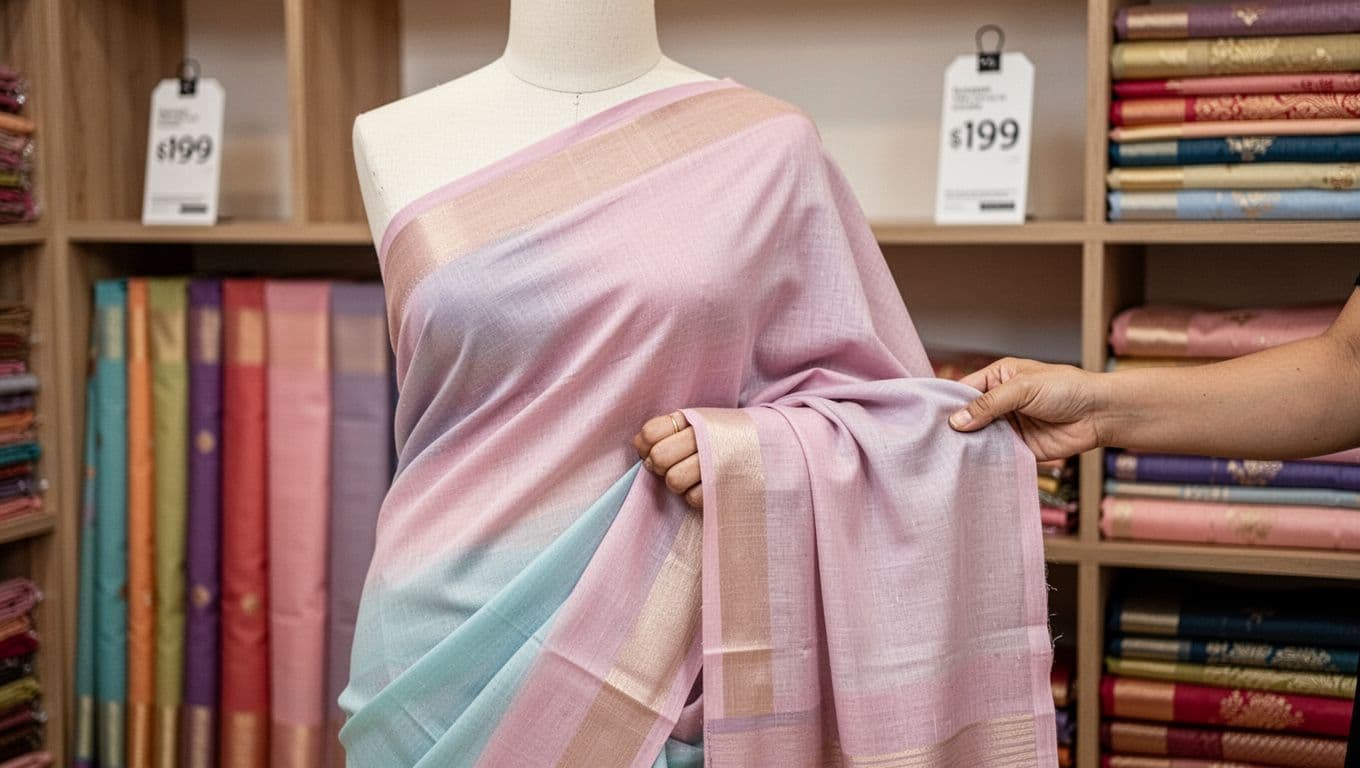
Silk Sarees wholesale for weddings, gifting, and higher ticket orders
Silk sits in the "giftable" zone as part of our Wedding Wear Collection. It works for wedding season, anniversaries, and festive buys, including Bridal Wear Sarees. When true silk isn't clearly labeled, we should watch for blends and silk-look fabrics, then price them honestly.
Wholesale ethnic sarees that sell on regional style and tradition
Regional stories help conversion. Bandhani, Chanderi, and Banarasi-inspired looks sell better when we name the style and explain the vibe. We should keep entry, mid, and premium options with an Unstitched Blouse Piece so every buyer finds a fit.
Designer Sarees wholesale for social media driven sales
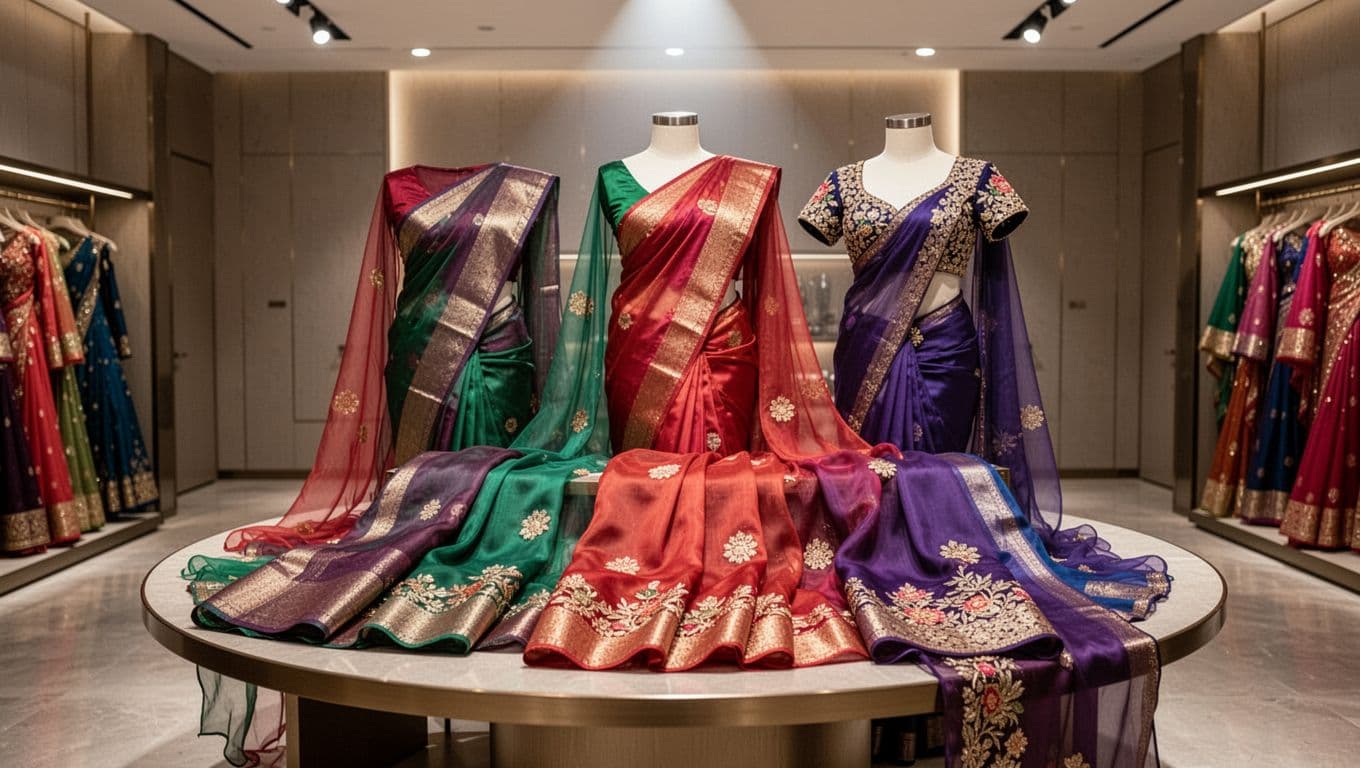
Designer looks including Ready to Wear Sarees move on Instagram and WhatsApp catalogs because they photograph well. Party Wear Sarees, organza looks, and statement blouse pairings give us strong hooks for launches and Festive Wear Sarees edits.
Printed Sarees and embroidered sarees for fast catalog turnover
Prints bring volume, while embroidery adds perceived value, especially in Georgette Saree Wholesale and Chiffon Saree options. For online selling, we should shoot one close-up of the border or work, then use simple titles (example: "Blue floral print saree with embroidered border").
How we choose the best saree wholesale supplier (a simple checklist we can trust)
-
Verify quality, request samples when possible: We should ask for close-ups in natural light of Export Quality Sarees and confirm blouse piece details.
-
Compare pricing and MOQ across saree manufacturers: The lowest price isn't best if MOQ is high.
-
Check return policy and exchange terms: We should confirm what counts as damage, defect, or mismatch.
-
Confirm shipping timelines and packaging: Late dispatch kills sales during wedding rush weeks.
-
Prefer an online Wholesale Saree Catalogue we can browse any time: A searchable catalog helps us reorder fast, for example, we can browse the full catalog online instead of waiting on forwarded images.
-
Read reviews and testimonials: Consistent feedback matters more than one viral post.
Amrah Wholesale is a practical example because the catalog format supports quick browsing, and it's easier to keep records of what we ordered.
Wholesale Saree Price Guide: What to Expect in 2026
For February 2026, many Surat catalogs show these common per-piece ranges:
-
Cotton: ₹700 to ₹1,200
-
Ethnic: ₹700 to ₹1,999
-
Designer: ₹820 to ₹1,899
-
Printed/embroidered: ₹949 to ₹1,350
-
Silk: Often listed under designer or blends, sometimes in the same ₹820 to ₹1,899 range on some catalogs
Set sizes matter. If a set is 4 to 8 pieces, total order value rises fast, even if per-piece looks "budget." As quantity increases, B2B buyers usually get better rates, so negotiation makes sense after proving repeat buying.
When we request a saree wholesale price list, we should also ask about GST and shipping. Those two line items change our real landing cost.
Buying wholesale sarees online vs visiting a wholesale saree shop near me
A "wholesale saree shop near me" search, such as at the Surat Textile Market, makes sense when we want to touch fabric before buying. Still, online sourcing removes the geography barrier, especially when we need variety and faster reorders.
Here's a simple comparison we can use:
|
Factor |
Online |
In-person |
|---|---|---|
|
Variety |
Wider catalogs from Online Saree Wholesalers |
Limited to local stock |
|
MOQ flexibility |
Often set-based, sometimes smaller |
Depends on the shop |
|
Ability to check fabric |
Photos, videos, samples |
Immediate touch and feel of Fabric and Texture |
|
Travel/time cost |
Low |
Higher, plus market time |
|
Reordering speed |
Fast, repeat from history |
Slower if we must revisit |
Online also helps us browse new arrivals, compare prices quickly, and pay through standard checkout options (Cash on Delivery Options may be available on some orders, depending on seller and location).
How we start a saree reselling business with Wholesale Sarees for Business, from first order to first sale
Step 1: Choose a niche (ethnic, designer, cotton). A niche keeps our first order focused.
Step 2: Set up supply. We should create an account, save style links, and track set sizes.
Step 3: Price for profit. Use: cost + fees + margin. Fees include packaging and platform cuts.
Step 4: Pick sales channels. WhatsApp and Instagram work for fast starts, while Meesho, Amazon, and our own site add scale.
Step 5: Reorder smart. Use Bulk Saree Orders to scale confirmed winners; bulk sarees for resellers reduce per-unit cost.
One caution: we shouldn't overbuy "pretty" styles. Cash flow beats compliments.
Tips to maximize profit from wholesale sarees without overstocking
-
Test latest saree designs in smaller quantities first, then scale what sells.
-
Focus on wholesale designer sarees and party wear sarees for higher-margin festive seasons, then backfill with daily-wear staples.
-
Bundle sarees with blouse pieces or simple add-ons to raise perceived value.
-
Use social media for mini catalogs, plus short real videos for fabric fall.
-
Reorder bestsellers fast so we don't lose momentum.
For festive and party wear drops, we can build a stronger margin mix by shopping from a focused wholesale designer sarees collection.
FAQ: wholesale sarees for retailers and resellers
1) What is the minimum order for wholesale sarees?
The Minimum Order Quantity changes by supplier and by design. Many listings sell in sets (often 4 to 13 pieces), while some allow singles. Before we pay, we should confirm MOQ per design, whether mixing is allowed, and if the unstitched blouse piece is included.
2) How do we find a reliable saree wholesale supplier?
We should check quality proof, compare pricing and MOQ, confirm returns, and verify shipping timelines. After that, we can review real buyer feedback and place a small first order to test consistency before scaling.
3) Can we buy wholesale sarees online in India?
Yes. We can browse the wholesale saree catalogue, select sets or singles (where available), and place an order through the supplier's site or booking process. Amrah Wholesale is one example where we can choose styles online and place a transactional order when we're ready.
4) What types of sarees sell best in bulk?
Cotton sells daily because it's practical. Wholesale ethnic sarees move well when regional demand is strong. Designer styles from the wedding wear collection often spike during festivals and weddings because buyers want a standout look for photos and events.
5) Is there a wholesale saree shop near me?
Local markets may have wholesale lanes, so we can check nearby textile hubs and ask for set pricing. If local variety feels limited, online sourcing helps because we can order from outside our city without frequent travel.
Conclusion
Margins don't improve by luck. They improve when we buy wholesale sarees with a plan, track what sells, and reorder based on proof. If we keep MOQ realistic, verify fabric and finishing, and price with all costs included, we'll avoid the classic reseller traps.
The simplest approach is to start narrow, sell through two channels, then expand our catalog only after we see repeat demand. That rhythm keeps cash moving and returns low, even during busy seasons.
Start your bulk saree journey today
When we treat wholesale sarees sourced from Surat like inventory strategy (not a one-time haul), we build a business that lasts.
Ready to Grow Your Saree Business?
Browse our complete range of wholesale sarees, cotton, Indian ethnic wear, designer, and more.
Competitive prices. Low MOQ. Fast dispatch. Trusted by 1,000+ retailers across India.
👉 SHOP WHOLESALE SAREES NOW → https://www.amrahwholesale.com

A co-ord set can be easy to sell. Customers get a complete look, and your team can display it as one outfit. But buying a new style in bulk is...

Ganesh Chaturthi is here. It's prayer time. It's family time. It's celebration time. And you need the right outfit to feel good all day long. The problem? You've got morning...

Raksha Bandhan 2026 falls on Friday, 28 August. For boutique owners, the buying window opens 6 to 8 weeks earlier. The fastest-moving categories at Surat wholesale hubs are cotton kurti...

Raksha Bandhan brings customers looking for ethnic outfits that feel festive but still comfortable for a full day of family visits, rituals, and photos. For your boutique, the rush starts...

Kids wholesale clothing can turn a single festival purchase into a full family sale. A parent shopping for a saree, kurta, or suit often wants a coordinated outfit for their...

A bulk order can fill your rails for a season, or tie up your cash in stock you cannot sell. Wholesale Pakistani clothing suppliers attract boutiques, retailers, and online sellers worldwide...

Your ganga suits wholesale price list can change quickly, so checking the latest catalogue is important before you plan your boutique or resale stock. Branded ethnic wear is gaining demand among...

If you run a clothing store or an online reselling business you know the struggle is real. Finding the right balance between good quality and low price is tough. Customers want soft fabric that lasts but they also...